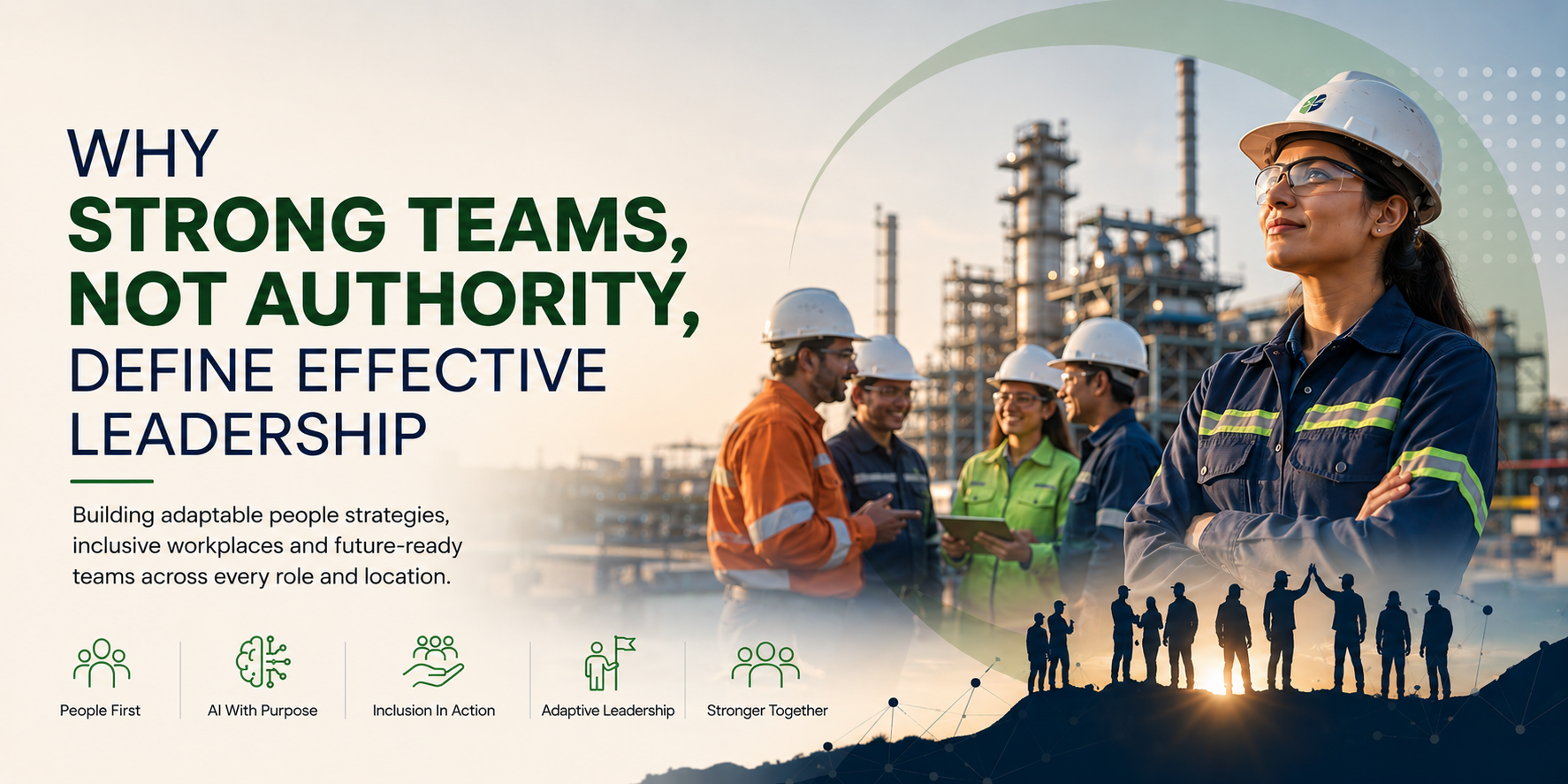
Why Strong Teams, Not Authority, Define Effective Leadership
Leadership in a large industrial organisation cannot be built around a single management formula. When employees operate across mines, manufacturing facilities, oil and gas fields, technology centres and corporate offices, their responsibilities, working environments and measures of success can be very different.
For Neha Sharma, Group Chief Human Resources Officer at Vedanta, this diversity makes adaptability one of the most important principles in people management. Rather than applying identical programmes across every workforce segment, she believes organisations need to maintain common values while allowing their people strategies to adapt to operational realities.
A Common Culture With Flexible Execution
Industrial organisations bring together employees with vastly different day-to-day experiences. A professional working at a corporate office may face very different challenges from someone working at a manufacturing plant, mine site or smelter.
According to Sharma, the answer is not to create completely separate approaches for each group. Instead, HR needs to establish consistency in values while remaining flexible in how those principles are implemented.
This approach has influenced how Vedanta views talent management. Rather than developing uniform programmes for everyone, the focus is on creating experiences that are relevant to individual roles throughout the employee lifecycle.
At the same time, collaboration between businesses and functions remains important. Cross-functional interaction, structured knowledge-sharing, leadership coaching and opportunities for experienced professionals and younger employees to learn from one another can help organisations combine established expertise with evolving digital capabilities.
AI Should Strengthen Human Decision-Making
As technology becomes a key component to workforce and business transformation, Sharma drives home this point: Technology alone can’t build people.
She is following in the footsteps of Vedanta’s Chairman, Mr Anil Agarwal who believes that AI should not be considered a substitute for human intelligence. Rather, AI can be a supplemental tool that enables our decisions to be improved.
In the context of industrial processes, AI can aid in predictive maintenance, real-time safety monitoring, optimisation of industrial processes, and data-informed decision-making.
This is true for HR as well.
AI is being used to enhance talent acquisition, workforce planning, personalised learning and capability development. But the goal is not just to speed up the current HR process with automation.
A bigger opportunity is to build a workforce that can adapt better to the evolving needs and train employees for the future.
Another aspect raised by Sharma is that technology cannot be used alone. If technology is to be a real capability, then continuous learning, leadership support and an organisational culture that enables people to experiment are needed.
Inclusion Must Reflect the Reality of the Workplace
Another part where a common strategy may pose issues is workplace inclusion.
Traditional approaches to inclusion have tended to be around urban and white-collar environments. However, the facts of a manufacturing workforce are often very different, especially for workers who are physically heavy, work in remote sites and locations.
While equity and belonging is a universal issue, the way it is addressed must take into account the context of the community in which employees work, Sharma says.
In an industrial organisation, inclusion may mean having the right infrastructure, developing capabilities, making the workplace safe, and making sure the leadership demonstrate a commitment to the practice.
It also involves ensuring that there are opportunities for frontline staff to learn, grow and develop long-term careers that are similar to those they can achieve within corporate functions.
Leadership Requires Adaptability
Leaders of a diverse workforce need to understand that one approach to leadership is rarely going to be effective in all parts of an organisation.
Sharma believes that effective leaders flex their style with a deep sense of a larger purpose, values and culture of an organisation.
She mentions three attributes she sees as particularly distinguishing leaders that can build up talent in various sectors of the workforce.
First is humility. Before making decisions, leaders should listen and understand real-life situations affecting different groups.
Second is, commitment to developing people. Leadership should go beyond performance management to providing opportunities for learning, working together, and professional development.
Thirdly is the capacity to make a meaningful link. From shop floor to a mine site or a corporate office, an employee should be able to recognize the value he adds to the business as a whole.
This is especially useful when staff members work in significantly different contexts within organisations.
Leadership Is About the Teams That Leaders Build
To Sharma, a leader’s power shouldn’t come from a title, it’s about how strong and good the team he’s built is.
From the perspective of that, developing leaders who can communicate effectively with various segments of the workforce, whether on the ground, with technical skills or in the corporate realm, is important.
This leadership requires a meritocratic, trust-based, cooperative and learning environment as well.
The goal is not just to have leaders who can lead different teams. It is to train the leaders to grasp those teams, nurture them and unite them with a common organisation goal.
The Meaning of High-Potential Talent Is Not Universal
The same thinking “with the grain” applies to identifying high potential employees.
From Sharma’s own experience in India, the USA, Mexico, Canada and Europe, there can be significant differences in the characteristics that make for potential between markets.
Entrepreneurial thinking and adaptability can be especially crucial in one context. Another, more technical skills might be just as important, such as deep technical expertise, stakeholder management, or complexity.
This presents a challenge to organisations that are trying to apply the same global talent framework in all markets.
Sharma does not want to abandon global frameworks. Rather, they must be more contextual and flexible to understand the multiple forms potential can manifest within markets, culture, the business world and the nature of the workforce.
Building People Strategies Around Reality
The broader message from Sharma’s approach is that managing a diverse workforce requires organisations to balance consistency with adaptability.
Common values can provide the foundation, but the way organisations develop employees, implement inclusion, use technology and identify future leaders needs to reflect the realities of different roles and markets.
For industrial organisations in particular, this means moving beyond standardised people programmes and focusing on role-relevant development, meaningful inclusion, human-centred use of AI and adaptable leadership.
Ultimately, the strength of an organisation depends not only on the systems it introduces, but on its ability to build capable teams and help employees across different parts of the business grow together.