
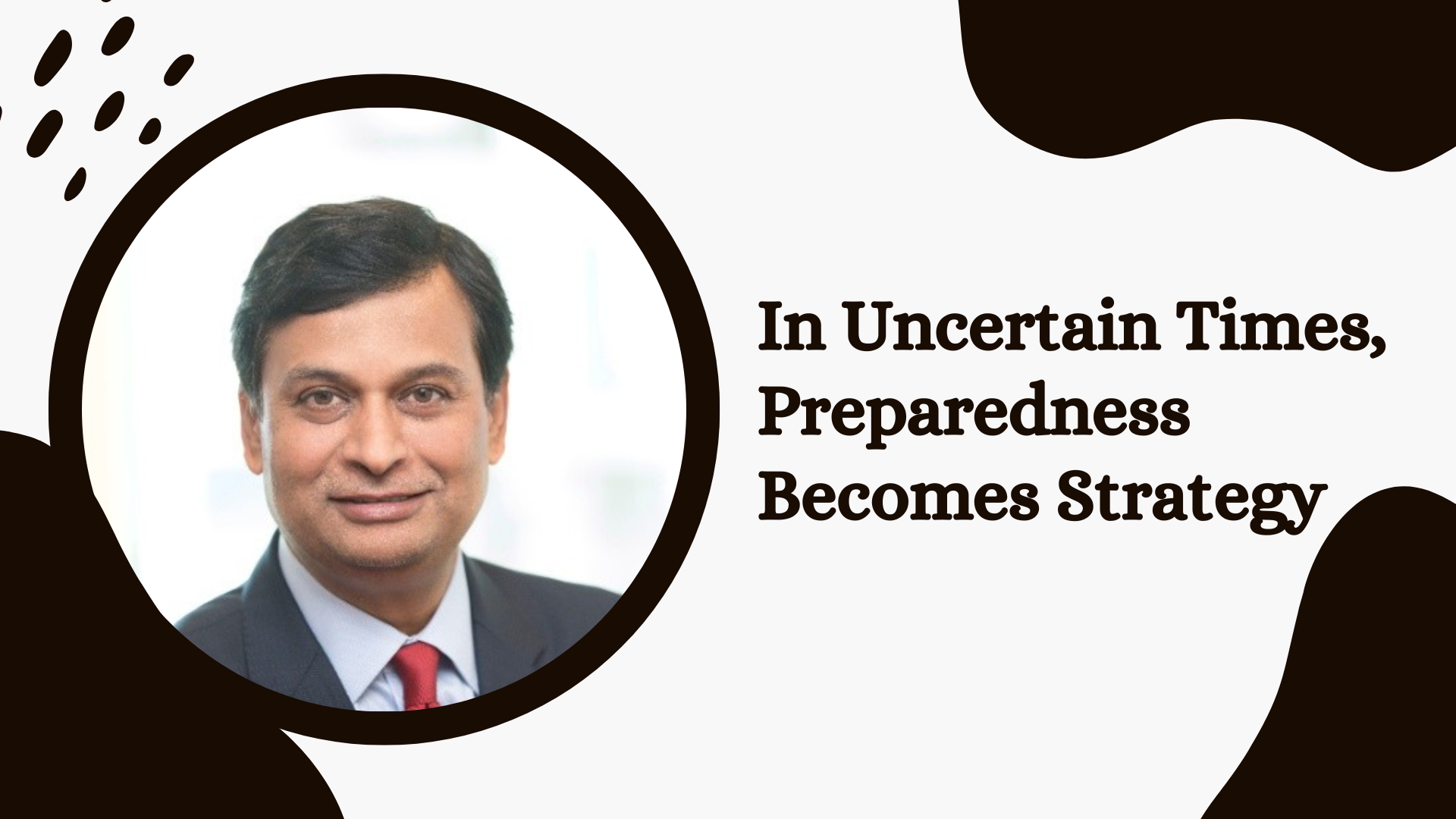
In Uncertain Times, Preparedness Becomes Strategy
Read Time:3 Minute, 14 Second
Uncertainty Is the New Normal
Leaders often feel that the challenges they face are unlike anything seen before. Yet, uncertainty has always been a constant in business. What has changed today is the intensity and speed at which disruptions unfold.
Recent conversations across the business landscape, including those reflected in Ajay Srinivasan News, show a growing focus on how organisations can remain steady in an environment that rarely pauses.
A Look Back at Disruption
History provides useful reminders. The 1973 oil crisis, for example, forced businesses to confront a sudden and severe shift in costs and supply. What seemed stable quickly became unpredictable.
Companies that relied heavily on cheap energy had to rethink their entire approach. This moment pushed organisations to become more efficient and disciplined in how they operated.
Crisis as a Catalyst for Change
Major disruptions tend to leave lasting impacts. The global financial crisis reshaped how institutions manage risk, while the pandemic accelerated digital adoption and altered consumer behaviour.
These events show that crises are not just interruptions—they are turning points that redefine how businesses function.
The Evolution of Corporate Resilience
In earlier decades, companies responded to uncertainty by strengthening their fundamentals. They improved cost structures, diversified their operations, and focused on financial health.
Many of these practices are now considered essential. What was once a reaction to crisis has become standard business discipline.
Why Today’s Challenges Feel More Complex
While history offers perspective, today’s environment introduces new layers of complexity.
The Blurring of Business and Geopolitics
Economic decisions are increasingly influenced by global politics. Supply chains, technology access, and trade relationships are shaped as much by strategy as by economics.
The Speed of Modern Disruption
Change no longer unfolds gradually. Market shifts can happen within hours, and disruptions can spread across regions in days.
A Shift Away from Pure Globalisation
The world is seeing a move toward regionalisation and self-reliance. This creates both risks and opportunities for businesses operating across borders.
The Role of Boards in Uncertain Times
For boards, the challenge is not just to respond—but to anticipate. Waiting for clarity can be tempting, but it often leads to delayed action.
Strong boards focus on readiness. They ask difficult questions and prepare for multiple outcomes rather than relying on a single forecast.
Planning Without Predicting
No organisation can predict the future with certainty. However, they can prepare for different possibilities.
This involves testing how business models would perform under stress—whether due to supply chain disruptions, rising costs, or shifting market dynamics.
Understanding and Reducing Dependencies
A key part of resilience is recognising where the business is most exposed. Dependence on a single supplier, market, or system can create significant risk during uncertain times.
Addressing these vulnerabilities early allows organisations to remain stable when disruptions occur.
Financial Strength Matters More Than Ever
Periods of uncertainty often highlight the importance of financial discipline. Companies with strong balance sheets and prudent management are better equipped to absorb shocks.
Resilience is not just about strategy—it is about having the resources to execute that strategy effectively.
Building Agility Into the Organisation
Adaptability should be built into how businesses operate. Flexible supply chains, scalable operations, and access to diverse markets provide a significant advantage.
These elements allow organisations to adjust quickly rather than react under pressure.
Lessons That Continue to Hold True
Across different eras, one pattern remains consistent: businesses that adapt early tend to perform better over time.
While uncertainty creates challenges, it also opens the door to innovation and new opportunities.
Acting Before Certainty Arrives
The most successful organisations are not those that wait for clarity. They are the ones that act while the future is still uncertain.
As leaders like Ajay Srinivasan have often emphasised in broader business discussions, the ability to stay flexible and make informed decisions early is what separates resilient organisations from the rest.

Happy
0 %

Sad
0 %

Excited
0 %

Sleepy
0 %

Angry
0 %

Surprise
0 %
 0
0
 0
0
Average Rating