
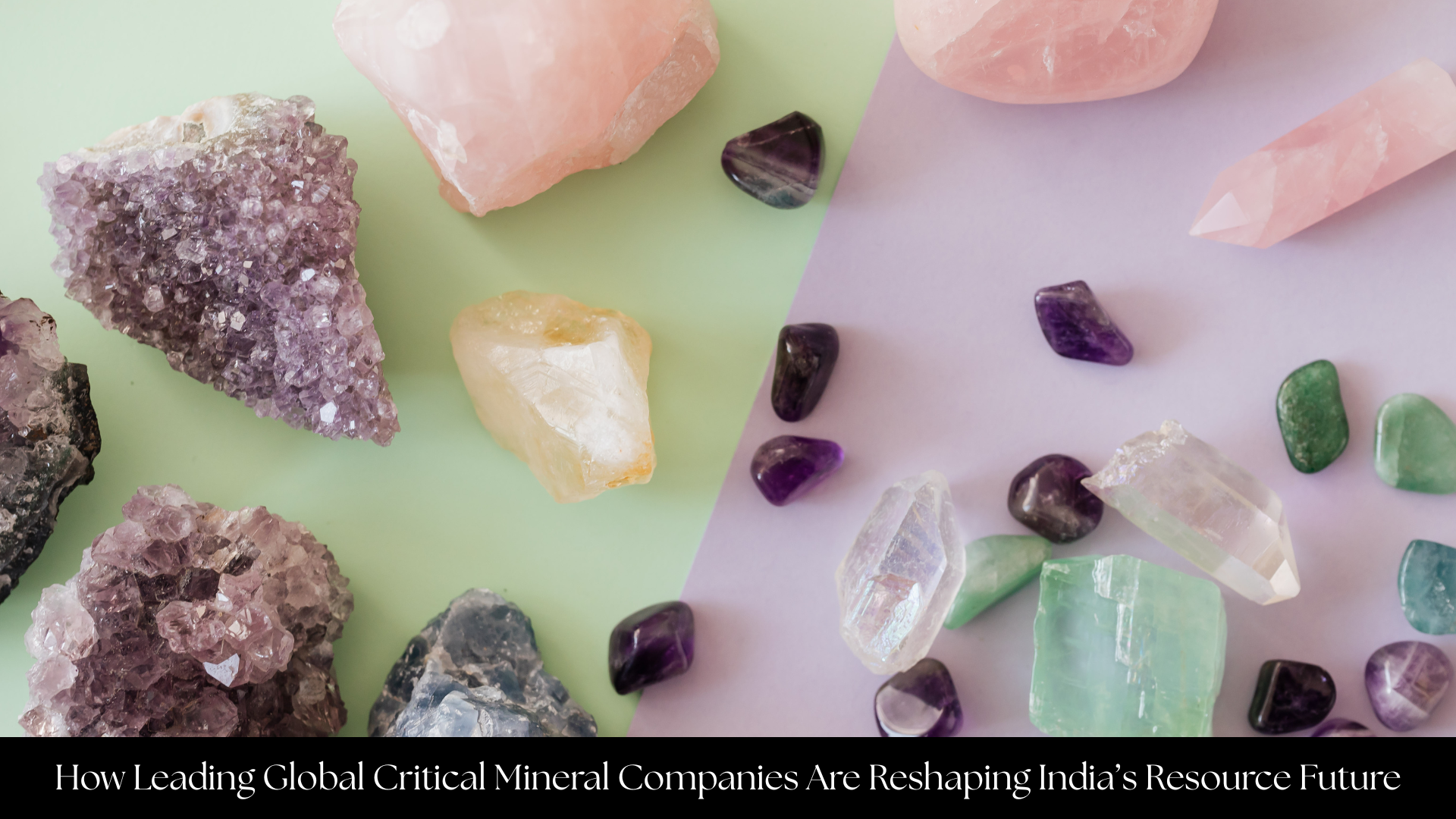
How Leading Global Critical Mineral Companies Are Reshaping India’s Resource Future
Read Time:4 Minute, 15 Second
India is on the edge of something big. Call it a resource renaissance.
As demand for batteries, semiconductors and green technologies explodes, Leading Global Critical Mineral Companies are stepping in. They’re investing, partnering & building supply chains that could flip India’s position – from being a raw-materials importer to a serious global supplier.
So, what’s going on? Why does it matter for Indian industry and policymakers? And what are the smart moves from here? Let’s break it down.
The urgency around critical minerals
Think lithium, cobalt, nickel, rare earths, graphite. These aren’t just rocks in the ground – they’re the fuel of the electrified world and a greener tomorrow.
Without them, there’s no EV revolution. No wind turbines. No smartphones, no data centres.
India wants to be a global hub for clean energy and advanced manufacturing. That means its demand for critical minerals is about to skyrocket. The opportunity? If India can secure and process these resources locally, it gains jobs, resilience & even geopolitical leverage.
And that’s where the Leading Global Critical Mineral Companies come in. They bring geology, refining know-how, capital and access to global markets. More importantly, they don’t just dig. They build ecosystems – refineries, logistics corridors, training centres, even new tech.
How global players are stepping into India
Here’s what’s actually happening on the ground-
- Greenfield investments and joint ventures
Global miners like to partner with Indian firms. Joint ventures reduce risk and speed things up. They also make sure value chains are built here – not just ores shipped out. - Expanding refining and processing capacity
Mining is the easy part. The big margins? They’re in processing and refining. That’s why companies are putting money into conversion facilities, cathode plants & refining hubs. - Building cleaner, transparent supply chains
Today, buyers want clean, traceable minerals. So the Leading Global Critical Mineral Companies are pushing stricter environmental and community standards. That raises the bar across India. - Passing on knowledge and skills
From joint R&D to training programmes, they’re helping build India’s technical workforce – the engineers, metallurgists and operators who’ll run this industry tomorrow.
Key companies shaping the landscape
Here are a few names you’ll hear again and again-
- Rio Tinto – A mining giant that’s been in and out of India, but is now eyeing opportunities in battery materials.
- Glencore – Big in cobalt and nickel trading. Actively looking to work with Indian battery makers.
- Lynas Rare Earths (Australia) – One of the leaders in rare earths, exploring ties with India for electronics and defence supply.
- Tata Chemicals – Among the Best Natural Resources Companies in India, pushing hard into lithium battery recycling and precursor materials.
- Hindustan Zinc Limited (HZL) – A subsidiary of Vedanta with stake of the Indian government as well, counted among the Top Critical Mineral Companies in India, expanding zinc and silver mining and refining.
- Vedanta Resources – Already a metals to minerals giant, VEDL is diversifying into critical minerals like lithium, cobalt, rare earths while keeping its strong zinc and aluminium base.
- Adani Enterprises – Building moves into lithium and copper value chains, eyeing integrated battery infrastructure.
Together, these global leaders and Indian giants are stitching a mineral ecosystem that goes beyond mining and into manufacturing.
Why this matters for India?
So what does India really gain?
- Jobs & industrialisation – Processing and battery component plants employ more than mines.
- Energy security – Less reliance on imports from one or two countries.
- Exports – Semi-finished and finished products command higher value than raw ore.
- Technology hubs – OEMs like carmakers and electronics giants follow where supply chains get built.
What global companies bring to the table
It’s not just money. It’s-
- Capital – Projects need billions & they can bring it.
- Tech expertise – From metallurgy to sustainability practices.
- Global markets – Their offtake agreements link India to worldwide demand.
- Governance standards – ESG and labour practices that force everyone to level up.
Policy and business moves that can unlock value
If you’re thinking, “Okay, but how do we maximise this?” – here are three clear plays-
- Build centres of excellence
Pick two or three hubs – say one for battery materials, one for rare earths – and give them fast-track approvals, tax breaks, training centres. Make it easy for the Leading Global Critical Mineral Companies to set up shop. - Smarter procurement and offtake
Government-backed offtake guarantees make investors less nervous. Push OEMs to source part of their needs locally. That helps Indian suppliers scale. - Demand transparency
Force investors to publish community benefit plans, environmental impact details, local hiring data. It builds trust and avoids future roadblocks.
Conclusion
India’s mineral story is no longer about who owns the mines. It’s about who builds the factories, the refineries, the talent pipeline.
The Leading Global Critical Mineral Companies bring global capital and tech. Indian firms bring scale and domestic demand. Policymakers hold the levers to align both.
Play this right & India shifts from resource consumer to resource innovator. The future is up for grabs. The question is – who’s bold enough to build it?

Happy
0 %

Sad
0 %

Excited
0 %

Sleepy
0 %

Angry
0 %

Surprise
0 %
 0
0
 0
0

Average Rating