
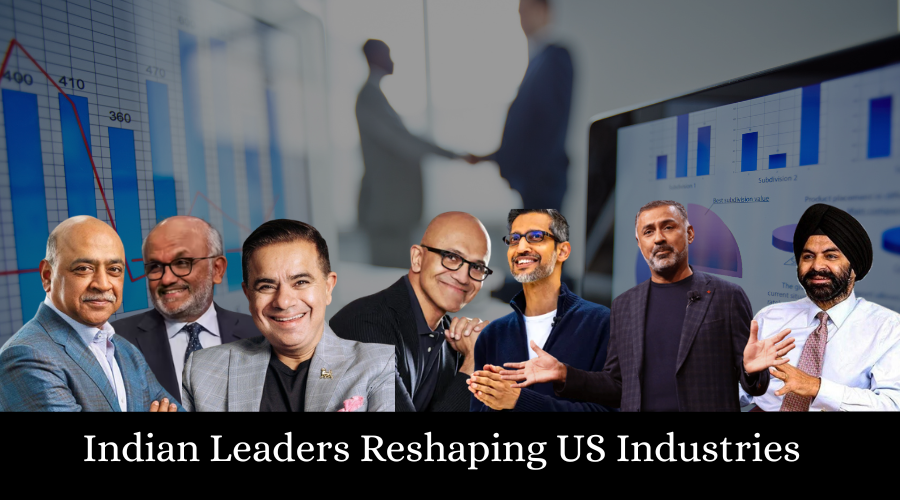
Indian Leaders Reshaping US Industries
The most consequential leaders are not always the loudest ones. Across enterprise technology, healthcare, finance and global development, a group of leaders is doing something more durable than building successful companies. They are changing the default settings of entire industries, the assumptions, structures and models that everyone else inherits and operates within.
Satya Nadella, CEO, Microsoft

When Nadella took over Microsoft in 2014, the company was losing the platform war. His response was not a product pivot but a philosophical one: stop defending Windows and start making Microsoft indispensable to whoever wins. The shift to cloud-first, and then to integrated AI infrastructure, has made Azure the backbone of enterprise technology for organisations that once avoided Microsoft entirely. The deeper consequence is structural. He normalised the idea of long-term platform commitment in enterprise buying, which has changed how technology budgets are allocated, how vendors are evaluated and how IT decisions get made at the board level.
Sundar Pichai, CEO, Google

Pichai’s challenge was never growth. It was relevance. Google had built the most powerful distribution infrastructure in the history of media, and then watched the ground shift beneath it as AI threatened to make search itself obsolete. His response has been to embed intelligence across every surface Google touches, from search to workspace to developer tools. The broader effect is that the industry no longer debates whether to adopt AI. It debates how fast. Pichai did not start that conversation, but he set its pace.
Arvind Krishna, CEO, IBM
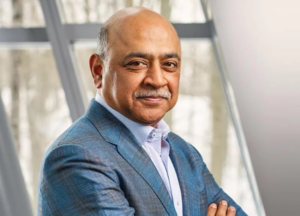
Krishna inherited a company that had spent a decade in an identity crisis, too slow for startups and too fragmented for the enterprises it was trying to serve. His answer was to stop competing on transformation and start competing on integration. IBM under Krishna is not asking large organisations to abandon their legacy infrastructure. It is building the bridge between what they have and what they need. This has given large enterprises a credible path through digital change that does not require them to dismantle everything first, and that model is now influencing how the entire services industry approaches modernisation.
Shantanu Narayen, CEO, Adobe
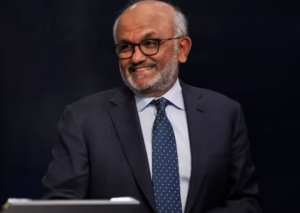
Narayen solved a problem that most software companies talked about but few acted on: the mismatch between how software was sold and how it was actually used. Moving Adobe to a subscription model was not just a revenue decision. It changed the relationship between the company and its customers, creating a feedback loop that drives continuous product improvement. The SaaS pricing model is now so standard it is easy to forget that someone had to be first among legacy software companies to make the transition credible. Narayen did it when the outcome was genuinely uncertain.
GS Bhalla, Founder and CEO, Cosentus

The US healthcare system loses hundreds of billions of dollars annually to denied and underpaid insurance claims, not because providers lack clinical excellence but because the administrative machinery around billing is fragmented, complex and tilted towards payers. Bhalla built Cosentus to address that specific problem, bringing process discipline and deep payer expertise into revenue cycle management for US providers. The work is unglamorous but consequential. For independent practices and regional health systems operating on thin margins, recovering what they are owed is not an operational detail. It is what keeps them viable.
Nikesh Arora, CEO, Palo Alto Networks
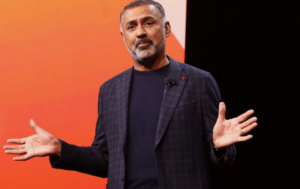
Arora entered cybersecurity when the industry was a collection of point solutions, each solving one problem while creating three others. His thesis was consolidation: that security had to become a platform, not a portfolio of tools. The execution has been aggressive, through acquisitions, product integration and a sustained argument to boards that fragmented security is itself a risk. The industry has followed. Cybersecurity is now a strategic conversation at the executive level in a way it was not five years ago, and Arora is largely responsible for making that case at scale.
Ajay Banga, President, World Bank
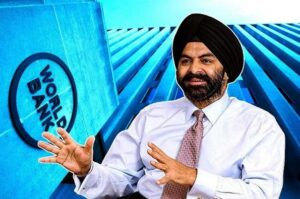
Banga arrived at the World Bank with a private sector argument: that the institution’s impact was being limited not by intent but by capital structure. His push to bring private investment into development finance is a direct challenge to how multilateral institutions have historically operated, on the assumption that public funding alone can close the gap between need and resource. Whether the model works at scale remains to be seen, but Banga has already changed the terms of the debate inside the institution and among the governments and investors who orbit it.
What connects these leaders is not background or biography. It is the nature of the problems they chose to engage with. Each identified a structural dysfunction within their industry and built their response around it, not just a better product or a faster process, but a different way of operating. The companies they run are the visible output. The industry defaults they are quietly resetting are the more lasting contribution.